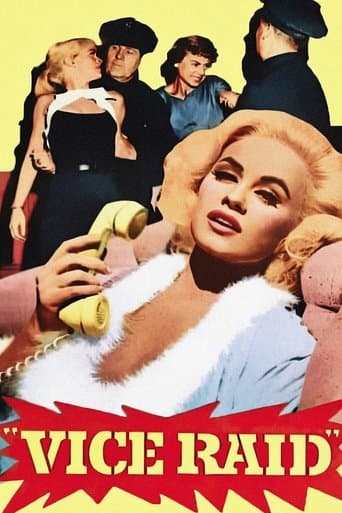
"Vice Raid," released in 1959, is a striking example of the film noir genre that intertwines themes of morality, deception, and the complexities of human relationships. The storyline revolves around a prostitute who finds herself entangled in a plot to frame a police officer, revealing the murky waters of justice and corruption. This central theme highlights the moral ambiguity present in many noir films, where characters often operate outside the law yet evoke sympathy from the audience. The film explores how desperation can lead individuals to make perilous choices, blurring the lines between right and wrong, which resonates with the societal tensions of the late 1950s, a time when the American public was grappling with issues of crime and morality in the wake of post-war disillusionment.
The cultural impact of "Vice Raid" lies in its reflection of the era's shifting attitudes toward sexuality and law enforcement. Released during a time when the sexual revolution was just beginning to emerge, the film pushes the boundaries of traditional storytelling by placing a female protagonist at the heart of a narrative that challenges male authority. This subversion of gender roles was significant for its time, as it not only showcased a woman's agency but also critiqued the patriarchal structures that often oppress women. The film's portrayal of a sex worker as a multidimensional character who can manipulate and outsmart law enforcement adds layers to the narrative, inviting audiences to reconsider their preconceived notions about morality and victimhood.
In terms of cinematography, "Vice Raid" employs classic noir techniques that enhance its dark and gritty atmosphere. The use of shadowy lighting, stark contrasts, and urban landscapes contributes to the film’s overall tension and sense of foreboding. Cinematographer John Alton, known for his work in the genre, skillfully utilizes low-key lighting to create a moody ambiance that reflects the internal struggles of the characters. The visual style not only serves to underscore the film's themes of betrayal and deception but also immerses the audience in the seedy underbelly of the city, making it a quintessential representation of late 1950s film noir aesthetics.
The production history of "Vice Raid" is equally intriguing, as it was part of a wave of independent films that sought to challenge the conventions of mainstream Hollywood. Produced by the small studio, American International Pictures, the film capitalized on the growing appetite for edgy, provocative content that appealed to younger audiences. This independent spirit allowed filmmakers to explore stories that were often considered taboo or controversial, paving the way for future films that would continue to address social issues head-on. The film's blend of crime, drama, and social commentary not only captured the zeitgeist of its time but also laid the groundwork for a new breed of cinema that would flourish in the years to come, influencing filmmakers who sought to tell more authentic and challenging stories.