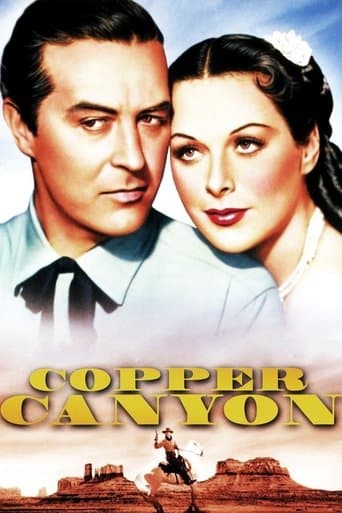
A group of copper miners, Southern veterans, are terrorized by local rebel-haters, led by deputy Lane Travis. The miners ask stage sharpshooter Johnny Carter to help them, under the impression that he is the legendary Colonel Desmond. It seems they're wrong; but Johnny's show comes to Coppertown and Johnny romances lovely gambler Lisa Roselle, whom the miners believe is at the center of their troubles.
"Copper Canyon," released in 1950, is notable for its exploration of post-Civil War tensions and the lingering animosities that can shape communities long after the fighting has stopped. The film presents a microcosm of Southern society, where the miners, primarily Southern veterans, are depicted as struggling to rebuild their lives amid both economic hardship and social strife. The character of Johnny Carter, who is mistaken for the legendary Colonel Desmond, serves as a catalyst for change, reflecting themes of identity and redemption. His journey from illusion to reality not only challenges the miners' perception of heroism but also highlights the complexities of loyalty and the burden of the past, making the film resonate with audiences who were grappling with similar issues in the post-war era.
The film's cinematography, helmed by director and cinematographer John Farrow, captures the rugged beauty of the American Southwest, effectively using the landscape to heighten the tension and drama of the miners' plight. The stark contrasts between the expansive desert vistas and the claustrophobic settings of the mining town create a visual metaphor for the miners' entrapment and their struggle for freedom. The use of natural lighting and composition enhances the emotional weight of the narrative, allowing viewers to feel the oppressive atmosphere that the characters endure. Farrow's ability to blend action with stunning visuals makes "Copper Canyon" not just a simple Western but a film that speaks to the broader human experience.
In terms of cultural impact, "Copper Canyon" emerged during a period when Westerns were evolving, reflecting a shift towards more nuanced representations of heroism and morality. The film, while fitting into the traditional mold of Westerns, challenges the archetype of the lone gunslinger by introducing a protagonist who is initially misunderstood and whose true capabilities unfold over time. This complexity paved the way for future Westerns to explore deeper character arcs and moral ambiguity. Additionally, the film's interactions between miners and local authority figures highlight themes of class struggle and social justice, making it relevant to audiences who were beginning to question authority and societal norms in the post-war climate.
On the production side, "Copper Canyon" faced the typical challenges of its era, including budget constraints and a tight shooting schedule. It was produced by Columbia Pictures, a studio known for its B-movie output, which often meant that films had to maximize their impact with limited resources. The film's relatively modest budget did not hinder its ability to deliver an engaging narrative and dynamic performances, particularly from its lead actors, who brought charisma and depth to their roles. The film's success, despite these limitations, is a testament to the creativity and determination of the cast and crew, showcasing how compelling storytelling can shine through even in less-than-ideal circumstances.