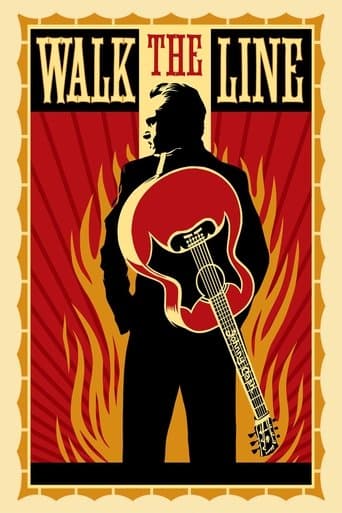
A chronicle of country music legend Johnny Cash's life, from his early days on an Arkansas cotton farm to his rise to fame with Sun Records in Memphis, where he recorded alongside Elvis Presley, Jerry Lee Lewis and Carl Perkins.
"Walk the Line" delves deeply into themes of love, addiction, and redemption, effectively portraying the tumultuous life of Johnny Cash. The film highlights Cash's complex relationships, particularly with his wife, June Carter, showcasing how love can be both a source of strength and a catalyst for personal struggle. The narrative not only focuses on Cash's battles with substance abuse but also emphasizes the transformative power of love and support as he seeks to overcome his demons. This duality serves as a poignant reminder of the human experience, where joy and pain often coexist, making Cash’s journey relatable to many viewers.
The cultural impact of "Walk the Line" extends far beyond its box office success, as it reignited interest in Johnny Cash's music and legacy. Upon its release, the film introduced a new generation to Cash's profound contributions to country music, blending traditional sounds with the grit of rock and roll. The film's success also sparked a resurgence of interest in the genre as a whole, highlighting the rich tapestry of American music and inspiring countless musicians who sought to emulate Cash's authentic storytelling and raw emotion in their own work. This cultural revitalization demonstrates the film's powerful role in celebrating and preserving musical history.
Cinematographically, "Walk the Line" employs a rich visual palette that captures the essence of Cash's life and the eras he traversed. The filmmakers used a combination of warm, muted tones to evoke nostalgia, while also employing striking contrasts during more intense moments, effectively mirroring Cash's internal struggles and triumphs. The cinematography, complemented by the film's meticulously crafted production design, transports viewers into the heart of mid-century America, from the cotton fields of Arkansas to the vibrant music scene of Memphis. This attention to detail not only enhances the storytelling but also immerses the audience in the emotional landscape of Cash's life.
The production history of "Walk the Line" is equally compelling, marked by the dedication of its lead actors, Joaquin Phoenix and Reese Witherspoon, who both underwent rigorous training to authentically portray Cash and Carter. Phoenix, in particular, immersed himself in Cash's music, performing all of his own vocals, which added a layer of authenticity to the film. This commitment to realism extended to the film's script, which was based on Cash's autobiography and extensive interviews with those who knew him best. The collaborative effort of the filmmakers, actors, and musicians resulted in a biopic that not only honors Cash's legacy but also resonates with audiences on a deeply emotional level, solidifying its place in the canon of great music films.