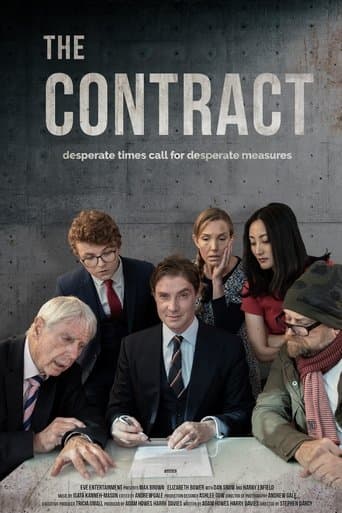
The Contract is a dark, farcical satire following a group of well-connected opportunists who inherit a lucrative government contract to privatise a failing prison.
"The Contract" (2022) delves into the murky waters of capitalism and moral ambiguity, offering a darkly comedic lens through which to examine the privatization of public institutions. The film's central theme revolves around the ethical dilemmas faced by its characters—opportunists who prioritize profit over the welfare of those they exploit. By juxtaposing the greed of these characters with the harsh realities of prison life, the film invites viewers to confront the uncomfortable truth that the systems designed to serve society can often become tools for exploitation. This satirical approach serves as both a critique of contemporary socio-economic structures and a reflection on the lengths to which individuals will go to secure their own interests.
Culturally, "The Contract" resonates with ongoing discussions about the privatization of public services, particularly in the context of the American prison system. As debates rage over mass incarceration and the ethics of privatizing prisons, the film captures the zeitgeist by reflecting societal anxieties about the commodification of justice. Through its exaggerated portrayal of the characters' moral failings, the film underscores a growing awareness of how corporate interests can overshadow human rights, making it a timely commentary on the intersection of wealth, power, and governance. This relevance not only enhances its entertainment value but also positions the film as a conversation starter in an era of increasing scrutiny of institutional practices.
Visually, "The Contract" employs a striking cinematographic style that amplifies its satirical tone. The use of stark contrasts between the polished, affluent settings of the opportunists and the grim realities of the prison environment creates a powerful visual dichotomy. This aesthetic choice reinforces the film's critique of the characters' disconnect from the consequences of their actions, effectively immersing the audience in a world where privilege blinds individuals to the suffering around them. The cinematography also features dynamic camera movements and inventive framing that add layers of tension and humor, enhancing the film's overall impact and reinforcing its darkly comedic narrative.
In terms of production history, "The Contract" emerges as a testament to independent filmmaking in a post-pandemic landscape, showcasing how small-budget films can tackle big issues with creativity and wit. The film's production team, comprised of passionate industry veterans, navigated the challenges of limited resources while still managing to deliver a polished final product. This resourcefulness not only highlights the resilience of independent filmmakers but also underscores a growing trend of producing thought-provoking content outside of traditional studio systems. By prioritizing storytelling and character development over spectacle, "The Contract" exemplifies how independent cinema can effectively challenge dominant narratives and provoke meaningful discourse in a crowded film landscape.
FREQUENTLY ASKED QUESTIONS
REVIEWS
You need to be signed in to write a review.
No reviews yet. Be the first to review this movie!
DISCUSSION
Sign in to join the discussion.
No comments yet. Be the first to share your thoughts!