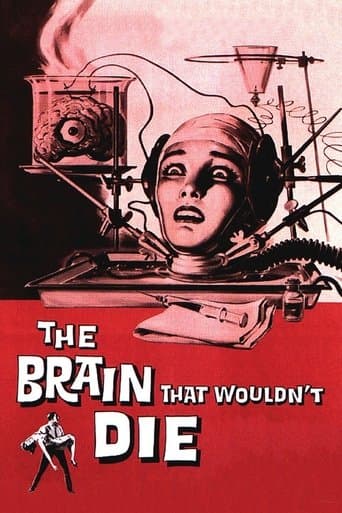
Dr. Bill Cortner and his fiancée, Jan Compton, are driving to his lab when they get into a horrible car accident. Compton is decapitated. But Cortner is not fazed by this seemingly insurmountable hurdle. His expertise is in transplants, and he is excited to perform the first head transplant. Keeping Compton's head alive in his lab, Cortner plans the groundbreaking yet unorthodox surgery. First, however, he needs a body.
"The Brain That Wouldn't Die," a cult classic from 1962, is a fascinating exploration of the intersection between science and morality. At its core, the film grapples with the ethical implications of medical advancements, particularly in the realm of transplantation. Dr. Bill Cortner, consumed by his ambition to achieve the impossible, embodies the archetypal mad scientist who prioritizes his experiments over human life and dignity. This moral quandary resonates with audiences, prompting reflections on the consequences of unchecked scientific pursuit. The film challenges viewers to consider the limits of human endeavor and the potential horrors that can arise when ethical boundaries are disregarded in favor of personal ambition.
The film also serves as a striking commentary on gender dynamics and objectification, particularly in its portrayal of Jan Compton. As Cortner's decapitated fiancée, her character is reduced to a mere head in a jar, symbolizing the extreme objectification of women in both the medical field and society at large. This unsettling representation invites discussions about autonomy and agency, particularly in the context of relationships where one partner exerts overwhelming control over the other. The horror of Compton’s predicament becomes a reflection of broader societal issues, making the film not just a simple horror flick but also a critique of the gender norms of its time.
Cinematically, "The Brain That Wouldn't Die" is notable for its striking visuals and inventive use of practical effects, which were groundbreaking for its era. The film employs a mix of surreal imagery, particularly in the scenes featuring Jan's head, to create a sense of unease and provoke thought. The use of close-ups and shadowy lighting enhances its nightmarish quality, fostering an atmosphere of dread that lingers long after the credits roll. This innovative approach to cinematography, combined with an evocative score, contributes to the film’s cult status, as it immerses viewers in a world where science fiction meets horror in a uniquely unsettling way.
The production history of "The Brain That Wouldn't Die" is equally intriguing, marked by its low-budget origins and the resourcefulness of its creators. Initially released as "The Head That Wouldn't Die," the film underwent several changes before its final cut, reflecting the challenges faced by independent filmmakers in the early 1960s. Despite its modest budget and some rough edges, the film has garnered a loyal fanbase over the decades, becoming a staple of midnight movie screenings and a favorite among aficionados of camp cinema. Its enduring legacy is a testament to the creativity and ambition of its filmmakers, who managed to craft a memorable piece of genre cinema that continues to provoke discussion and analysis today.