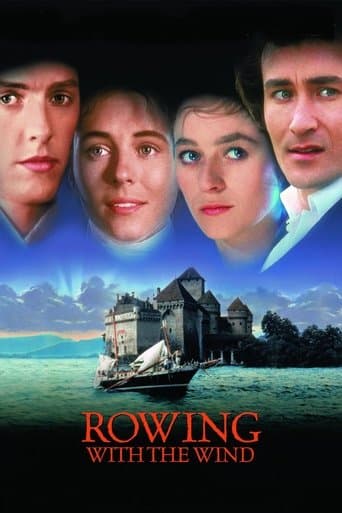
In the summer of 1816, Percy Shelley, his mistress Mary, and her stepsister Claire visit Lord Byron at Lake Geneva. Byron challenges each to write a horror story, and Mary begins her novel, Frankenstein. She imagines the monster becoming real, and for the next six years, as tragedy befalls those around her, she believes the personification of her imagination is the cause. Against this backdrop, Claire has Byron's baby then is estranged from him and barred from her daughter. Byron and Percy continue their friendship, the one self-centered and decadent, the other wildly idealistic. The Shelleys take up residence near Pisa.
"Rowing with the Wind" intricately weaves together the lives of some of the most iconic literary figures of the Romantic era, exploring profound themes of creativity, existential anguish, and the consequences of imagination. At its core, the film delves into the idea that great art often emerges from personal suffering and turmoil. As Mary Shelley grapples with the creation of her literary monster, she is haunted by real-life tragedies—the deaths of loved ones and her own tumultuous relationship with Percy. This interplay between her internal struggles and the external chaos surrounding her highlights the duality of artistic inspiration, suggesting that the darkest emotions can give birth to the most enduring works of art.
The film's cultural impact is significant, as it not only chronicles the origins of "Frankenstein," one of literature's most enduring tales, but also serves as a celebration of the Romantic movement itself. By showcasing the lives of Mary Shelley, Percy Shelley, Lord Byron, and Claire, it captures a unique moment in time when literature and philosophy were deeply intertwined with personal lives. The film invites viewers to reflect on how these historical figures challenged societal norms and pursued their passions against the backdrop of the industrial revolution, thus positioning "Rowing with the Wind" as a cultural artifact that resonates with the ongoing conversations about the role of the artist in society.
Visually, "Rowing with the Wind" is a feast for the eyes, with cinematography that captures the breathtaking landscapes of Lake Geneva and the Italian countryside. The film uses natural light and sweeping shots to create a sense of both beauty and foreboding, mirroring the emotional highs and lows experienced by its characters. The atmospheric cinematography not only enhances the storytelling but also evokes the Romantic ideals of nature as a reflection of human emotions. This visual storytelling complements the narrative, allowing viewers to feel the weight of the characters' experiences and the sublime terror that accompanies their artistic endeavors.
The production history of "Rowing with the Wind" is noteworthy, particularly regarding its ambitious attempt to bring such a complex and layered story to the screen. Directed by Gonzalo Suárez, the film faced challenges in capturing the essence of its multifaceted characters while remaining faithful to historical events. The choice to film on location in Switzerland and Italy added authenticity, allowing the landscape to become a character in its own right. The film’s score, composed by the talented musician, further enhances the mood, creating an auditory backdrop that resonates with the emotional depth of the story. Despite facing some criticism for its pacing and narrative choices, "Rowing with the Wind" remains a rich exploration of creativity and the lives of its legendary subjects, creating a lasting impression on audiences and scholars alike.