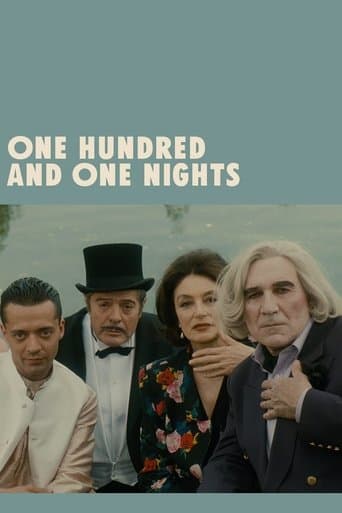
Monsieur Cinema, a hundred years old, lives alone in a large villa. His memories fade away, so he engages a young woman to tell him stories about all the movies ever made.
“One Hundred and One Nights,” directed by the visionary filmmaker Agnès Varda, is a rich tapestry woven from the threads of cinematic history and nostalgia. The film serves as a love letter to the art of storytelling and the magic of cinema itself, embodied in the character of Monsieur Cinema, played by the venerable Michel Piccoli. As he grapples with the fading memories of a century's worth of films, the narrative explores themes of memory, loss, and the transient nature of artistic expression. Varda brilliantly juxtaposes the old and new, illustrating how cinema evolves while still being deeply rooted in its past, prompting viewers to reflect on their own connections to film and memory.
The film's cultural impact is profound, especially as it celebrates the diversity of cinematic storytelling from various countries and genres. By inviting the young woman, played by the enchanting Catherine Deneuve, to recount stories of films both iconic and obscure, Varda not only honors the legacies of legendary filmmakers such as Jean-Luc Godard and François Truffaut but also emphasizes the importance of passing down these stories to future generations. This intergenerational dialogue resonates with audiences, reminding us of cinema's role in shaping collective memory and identity, and how it can bridge the gap between different eras and cultures.
Visually, “One Hundred and One Nights” is a feast for the eyes, showcasing Varda's unique approach to cinematography that blends vibrant colors with whimsical, dream-like sequences. The film’s aesthetic is characterized by a playful use of lighting and composition, which enhances the storytelling and creates a nostalgic atmosphere that echoes the very essence of classic films. Varda’s choice to utilize a variety of film styles and techniques not only pays homage to the history of cinema but also reflects her innovative spirit as a filmmaker, inviting viewers to engage with the medium in a fresh and dynamic way.
The production history of “One Hundred and One Nights” is as captivating as the film itself, marked by Varda's determination to create a work that encapsulates her love for cinema. Originally conceived as a short film, the project evolved into a feature-length homage, showcasing Varda's ability to adapt and expand her vision. The film was also notable for its star-studded cast, featuring cameos from numerous beloved figures in the film industry, which speaks to Varda’s deep connections within the cinematic community. This collaborative spirit, combined with her fearless exploration of narrative and form, underscores Varda’s status as one of the pioneering voices in French cinema, leaving an indelible mark on the landscape of film artistry.