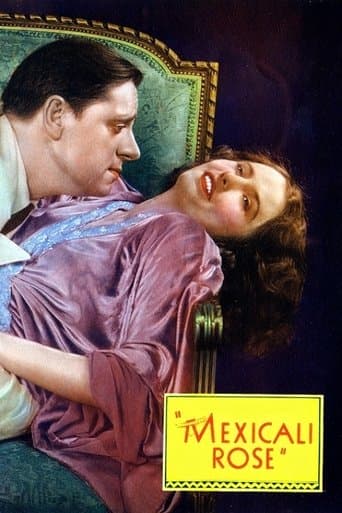
The owner of a border town gambling saloon falls in love with a promiscuous young girl. When she has an affair with another, he tosses her out of town. She gets revenge by marrying his younger brother.
"Mexicali Rose," released in 1929, is a fascinating exploration of themes such as love, betrayal, and revenge against the backdrop of a border town’s gambling scene. The film particularly highlights the complexities of romantic relationships, where the owner of the saloon, a man of power and authority, experiences both passion and vulnerability in his relationship with a young woman who embodies the spirit of independence and defiance. This dynamic serves as a commentary on the fluidity of love, especially in a setting where social norms are often subverted, making the narrative resonate with audiences seeking both drama and emotional depth.
Culturally, "Mexicali Rose" reflects the American fascination with the mythos of the borderlands during the late 1920s. The film taps into the zeitgeist of an era marked by Prohibition and the allure of the Wild West, where saloons and gambling houses were not just places of entertainment but also hubs of social interaction and moral ambiguity. By portraying life in a Mexican-American border town, the film provides a glimpse into the cultural intersections that define this vibrant region, challenging stereotypes and offering a more nuanced view of its inhabitants, particularly through the character of the young woman who defies societal expectations.
From a cinematographic standpoint, "Mexicali Rose" is notable for its use of early sound technology, marking a transition in filmmaking that would shape the industry for decades to come. As one of the early “talkies,” the film features a blend of dialogue and music that enhances its emotional impact, providing audiences with a richer storytelling experience. The visual style, characterized by the use of expressive lighting and framing, complements the film's dramatic tension, making it not only a narrative piece but also a pioneering work that showcases the potential of sound in cinema.
The production history of "Mexicali Rose" is equally intriguing, as it emerged during a period of significant change in Hollywood. The film was produced by Warner Bros., a studio that was at the forefront of the sound revolution. This transitional phase meant that filmmakers were experimenting with new techniques and technologies, often with limited resources. The challenges faced during production, from technical limitations to the need for innovative storytelling methods, ultimately contributed to the film’s legacy as a key example of early sound filmmaking, paving the way for future productions that would capitalize on the merging of sound and visual artistry.