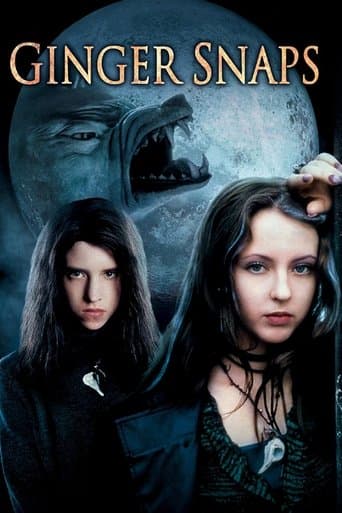
The story of two outcast sisters, Ginger and Brigitte, in the mindless suburban town of Bailey Downs. On the night of Ginger's first period, she is savagely attacked by a wild creature. Ginger's wounds miraculously heal but something is not quite right. Now Brigitte must save her sister and save herself.
"Ginger Snaps" stands out as a unique blend of horror and coming-of-age narrative, effectively exploring themes of adolescence, femininity, and the often tumultuous transition into womanhood. The film cleverly intertwines Ginger's transformation into a werewolf with her first menstruation, symbolizing the chaotic changes young girls experience during puberty. This connection between the monstrous and the feminine serves as a poignant commentary on how society perceives female sexuality and the fear that can accompany it. The visceral and often grotesque imagery associated with Ginger's transformation acts as a metaphor for the loss of innocence, making the film resonate deeply with those who have navigated similar experiences.
Culturally, "Ginger Snaps" has carved out a significant niche in the realm of feminist horror, often being lauded for its strong, complex female characters who defy traditional genre stereotypes. The film has become a cult classic, particularly among young women, who appreciate its unflinching portrayal of female rage and the bond between sisters. Its influence can be seen in a wave of contemporary horror films that prioritize female perspectives and narratives, showcasing how "Ginger Snaps" helped pave the way for a more nuanced representation of women in the genre. The film's ability to blend horror with a relatable, authentic storyline has allowed it to endure well beyond its release.
The cinematography of "Ginger Snaps" plays a crucial role in establishing its eerie atmosphere and enhancing its themes. Shot by director of photography Greg Middleton, the film employs a moody palette that juxtaposes the suburban setting with the dark, primal transformation of its protagonists. The use of close-ups and stark shadows effectively conveys the tension and fear experienced by the sisters, while also amplifying the sense of isolation that pervades their lives. The visual style, coupled with the film's sharp, witty dialogue, creates a compelling viewing experience that lingers long after the credits roll.
Production-wise, "Ginger Snaps" benefited from a relatively modest budget, but the creativity of its team turned constraints into strengths. Directed by John Fawcett and co-written with Karen Walton, the filmmakers invested in practical effects rather than relying heavily on CGI, which gave the transformation scenes a tangible, visceral quality. This choice not only heightened the film's horror elements but also contributed to its authenticity, allowing the audience to feel the raw, emotional stakes of the characters' struggles. The dedication to crafting a narrative that balances horror with humor, as well as the bond between sisters, has helped "Ginger Snaps" maintain a lasting legacy in the horror genre.