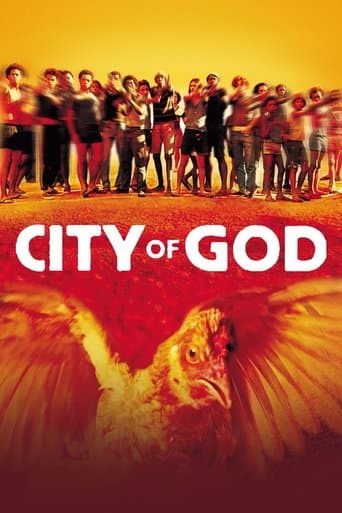
In the poverty-stricken favelas of Rio de Janeiro in the 1970s, two young men choose different paths. Rocket is a budding photographer who documents the increasing drug-related violence of his neighborhood, while José “Zé” Pequeno is an ambitious drug dealer diving into a dangerous life of crime.
"City of God," directed by Fernando Meirelles and co-directed by Kátia Lund, is a powerful exploration of the choices faced by youth in the harsh environment of Rio de Janeiro's favelas. One of the film's central themes is the dichotomy between hope and despair, embodied in the contrasting paths of the protagonists, Rocket and Zé Pequeno. Rocket's aspiration to become a photographer represents a yearning for a better life, a way to escape the cycle of violence and crime that permeates the favela. In contrast, Zé's ruthless ambition to dominate the drug trade showcases how the allure of power and wealth can ensnare young men, leading them down a path of destruction. This thematic conflict resonates deeply, reflecting broader societal issues related to poverty, systemic inequality, and the loss of innocence.
Culturally, "City of God" had a significant impact on both Brazilian cinema and the global film landscape. Upon its release, the film garnered international acclaim and was instrumental in bringing the realities of life in the favelas to a worldwide audience. It challenged stereotypes and provided a raw, unflinching look at the socio-economic conditions that give rise to crime and violence. Furthermore, its success helped pave the way for more Brazilian films to gain recognition on the international stage, leading to a renaissance in Brazilian cinema that showcased diverse stories and perspectives, enhancing the global dialogue around urban struggles.
The film's cinematography, helmed by César Charlone, is one of its standout features. The vibrant yet gritty visual style captures the chaotic energy of the favela, blending documentary realism with stylized storytelling. Dynamic camera movements, such as the use of handheld shots and dizzying aerial views, create an immersive experience, drawing viewers into the world of City of God. The innovative use of color also serves a narrative purpose, with the bright hues of the favela contrasting sharply with the dark themes of violence and despair. This visual language not only enhances the storytelling but also reflects the complexity of life in the favelas—where beauty and brutality exist side by side.
The production history of "City of God" is equally fascinating, as it involved a unique collaboration between experienced filmmakers and local talent. Many of the actors were non-professionals who lived in the favelas, bringing authenticity and raw emotion to their performances. This decision not only contributed to the film's realism but also provided opportunities for those involved, showcasing their stories and struggles to a broader audience. The film's casting process was extensive, with thousands auditioning for roles, which ultimately led to a vibrant, fresh ensemble that resonated with viewers. By involving the community, the filmmakers not only captured an unfiltered portrayal of life in the favelas but also fostered a sense of ownership and pride among its inhabitants, making "City of God" a landmark film in both narrative and production approach.