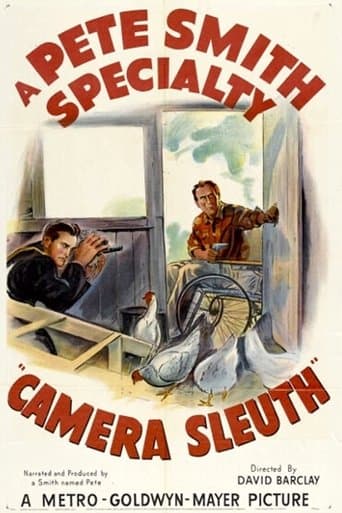
In this Pete Smith Specialty short, we see how real-life investigator Jo Goggin used a motion picture surveillance camera to gather evidence and disprove a fraudulent insurance claim.
"Camera Sleuth," a 1951 Pete Smith Specialty short, showcases the intersection of technology and detective work, reflecting the growing intrigue surrounding surveillance in post-war America. The film centers on Jo Goggin, a pioneering private investigator who adeptly utilizes a motion picture surveillance camera to expose a fraudulent insurance claim. This innovative approach not only underscores the potential of cinematography as a tool for justice but also highlights the evolving role of technology in everyday life, marking a significant cultural moment when the public began to grapple with the implications of surveillance in their own lives.
The themes of deception and truth are central to "Camera Sleuth," emphasizing the moral complexities of investigation and the lengths to which individuals will go to uncover the reality behind appearances. The film cleverly juxtaposes the mundane with the extraordinary, as Goggin's diligent work reveals how commonplace fraud can disrupt lives and impact industries. This exploration of ethical dilemmas resonates with audiences, inviting them to consider the consequences of dishonesty while simultaneously celebrating the triumph of truth through diligence and ingenuity.
Cinematographically, "Camera Sleuth" stands out for its inventive use of the motion picture camera as both a narrative device and a character in its own right. The film incorporates dynamic angles and engaging editing techniques that not only enhance the storytelling but also mimic the investigative process itself. By capturing the essence of surveillance, the film immerses viewers in the investigative experience, making them feel like participants in Goggin's journey. This innovative approach to cinematography reflects the era's fascination with technology and its potential, helping to set a precedent for future films that would incorporate similar themes of observation and inquiry.
In terms of production history, "Camera Sleuth" is emblematic of the post-war era's burgeoning interest in crime and investigation, often reflecting societal anxieties about trust and authenticity. The film, produced under the banner of Pete Smith Specialty Pictures, capitalized on the rising popularity of short films during this period, effectively blending entertainment with informative content. This unique format not only catered to audiences looking for engaging narratives but also served as a platform for raising awareness about issues like fraud and the importance of integrity in both personal and professional realms. As such, "Camera Sleuth" remains a fascinating artifact of its time, illustrating the interplay between film, technology, and societal values.