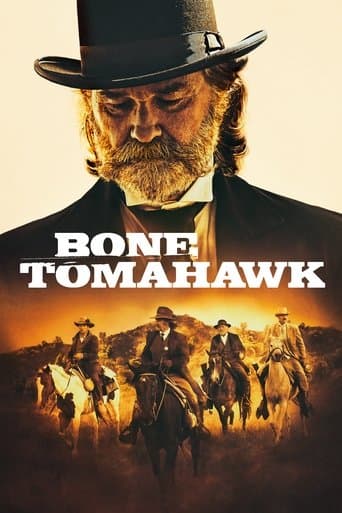
During a shootout in a saloon, Sheriff Hunt injures a suspicious stranger. The doctor's assistant, wife of the local foreman, tends to him in prison. That night, the town is attacked and they both disappear—only the arrow of a cannibal tribe is found. Hunt and a few of his men go in search of the prisoner and the foreman's wife.
"Bone Tomahawk," directed by S. Craig Zahler, is a unique blend of Western and horror genres, and it deftly explores themes of civilization versus savagery. The film presents a stark contrast between the ordered world of the 1890s American frontier and the primal chaos of the cannibalistic tribe that lurks in the shadows. This juxtaposition raises profound questions about humanity's nature and the thin veneer of civilization that separates us from our basest instincts. As Sheriff Hunt and his ragtag group venture into the wilderness to rescue their loved ones, they confront not only the external threat posed by the tribe but also the moral dilemmas and weaknesses within themselves, challenging viewers to consider the depths to which one might descend in the face of survival.
The cultural impact of "Bone Tomahawk" has been significant, especially within the realm of independent cinema. The film has garnered a cult following, largely due to its unconventional narrative style and the way it subverts genre expectations. Unlike traditional Westerns that often glorify the heroic cowboy, Zahler's film presents a more grounded and gritty portrayal of frontier life, where violence is brutal and consequences are dire. The film's willingness to blend graphic horror with a Western setting has inspired a new wave of filmmakers to experiment with genre mash-ups, encouraging audiences to embrace narratives that challenge the norms of storytelling in cinema.
From a cinematographic perspective, "Bone Tomahawk" is visually striking, thanks to the work of director of photography Benji Bakshi. The film captures the vast, desolate landscapes of the American West with a beautiful yet haunting lens, using natural light to enhance the authenticity of the setting. The slow pacing and deliberate framing contribute to an atmosphere of tension that builds throughout the film, drawing viewers into the narrative while highlighting the harsh realities faced by the characters. This meticulous attention to visual detail not only enhances the storytelling but also elevates the film to a level of artistry that resonates long after the credits roll.
The production history of "Bone Tomahawk" is equally intriguing, particularly considering its modest budget and the challenges faced during filming. Zahler, who also wrote the screenplay, had a vision that was initially met with skepticism from studios, as the combination of horror elements within a Western framework was seen as a risky endeavor. However, with a talented cast that includes Kurt Russell, Patrick Wilson, and Matthew Fox, the film was brought to life in a way that exceeded expectations. The dedication of the cast and crew, coupled with Zahler's unique storytelling approach, transformed "Bone Tomahawk" from an underdog project into a remarkable film that has left a lasting mark on both genre enthusiasts and critics alike.