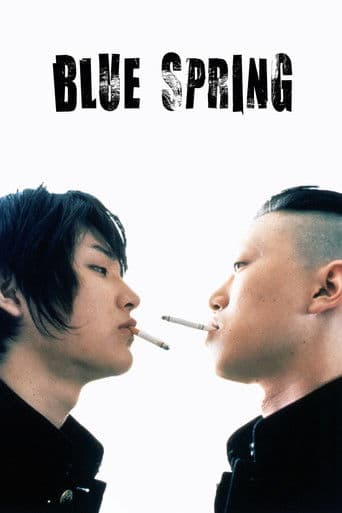
Soon after being named the new leader of his high school's gang system, Kujo grows bored with the violence and hatred that surround him. He wants desperately to abandon his post… but his once-enviable position of power has a strange way of making him feel powerless.
"Blue Spring," directed by Toshiaki Toyoda, is a striking exploration of youth disillusionment and the pervasive cycle of violence within Japanese high school culture. The film uniquely captures the ennui and existential dread experienced by adolescents who find themselves trapped in a system that glorifies aggression and status. Kujo's internal struggle serves as a poignant commentary on the emptiness of power; as he ascends to the role of gang leader, he realizes that leadership brings not fulfillment, but a profound sense of isolation and helplessness. This tension between aspiration and despair resonates deeply, inviting viewers to reflect on the societal pressures that shape young lives.
The cinematography in "Blue Spring" is particularly noteworthy, as Toyoda employs a raw, gritty aesthetic that mirrors the chaotic emotions of the characters. The film often features dynamic camera movements and unconventional angles, which immerse the audience in the tumultuous world of high school gangs. The use of natural lighting and urban landscapes accentuates the bleakness of the setting, enhancing the sense of entrapment that Kujo and his peers feel. This visual style not only reinforces the film's themes but also sets it apart from more polished, mainstream depictions of youth culture, creating a visceral experience that lingers long after the credits roll.
Culturally, "Blue Spring" stands as a significant work within the Japanese film canon, particularly in its representation of the youth experience in the early 2000s. It captures a moment of transition in Japan, where traditional values were being challenged by rapid modernization and globalization. The film resonated with a generation grappling with issues of identity, belonging, and societal expectations, prompting discussions about the pressures faced by young people. Its unflinching portrayal of violence and camaraderie among troubled youth sparked conversations about mental health and the need for societal reform, making it a relevant piece for both its time and for contemporary audiences.
On the production side, "Blue Spring" is a testament to independent filmmaking in Japan, showcasing Toyoda's bold vision and commitment to authenticity. The film emerged from a landscape where many directors were experimenting with narrative forms and themes, pushing boundaries in storytelling. The choice to feature relatively unknown actors contributed to the film's raw realism, allowing audiences to engage with the characters on a more intimate level. This approach, combined with a powerful soundtrack that underscores the emotional gravity of the narrative, reinforces "Blue Spring" as not just a film, but a cultural artifact that captures the complexities of youth and the search for meaning amid chaos.