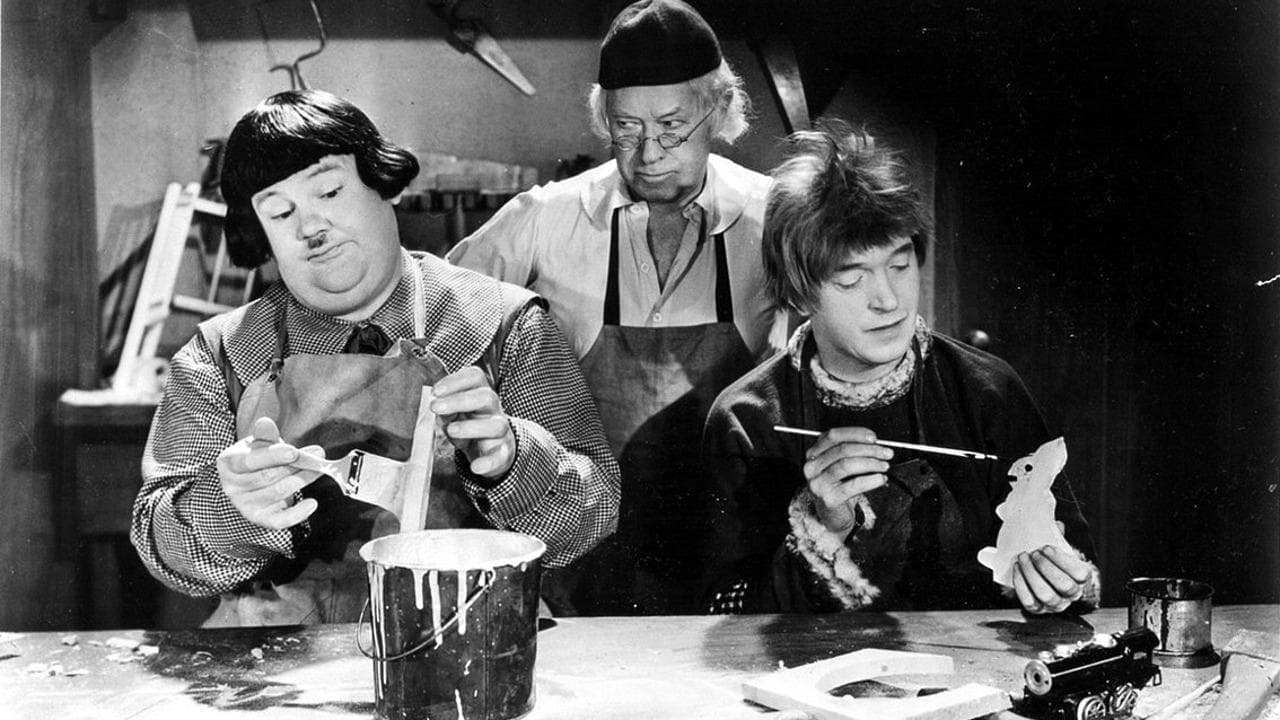
Ollie Dee and Stannie Dum try to borrow money from their employer, the toymaker, to pay off the mortgage on Mother Peep's shoe and keep it and Little Bo Peep from the clutches of the evil Barnaby. When that fails, they trick Barnaby, enraging him.
"Babes in Toyland," directed by Gus Meins in 1934, is a delightful amalgamation of whimsy and musicality that captures the essence of early American cinema. At its core, the film revolves around themes of friendship, loyalty, and the fight against evil, embodied in the characters of Ollie Dee and Stannie Dum. Their quest to save Mother Peep’s shoe from the villainous Barnaby not only emphasizes the importance of community and support but also reflects the childhood innocence that underpins the story. The film's playful narrative serves as a reminder of the value of standing up for loved ones, making it resonate with audiences of all ages.
The cultural impact of "Babes in Toyland" is notable, as it helps to cement the tradition of holiday-themed films in American cinema. Released during the Great Depression, the film provided a much-needed escape for audiences yearning for joy and laughter amid trying times. Its vibrant and fantastical setting, filled with charming characters and catchy musical numbers, contributed to a sense of nostalgia and comfort. Over the decades, the film has inspired various adaptations, including stage productions and television specials, establishing it as a beloved classic that continues to enchant new generations.
From a cinematographic perspective, "Babes in Toyland" showcases the inventive techniques of early sound films, integrating music and visual storytelling in a way that was innovative for its time. The use of vibrant sets and elaborate costumes helped create a vivid, dreamlike world that transports viewers to a place where toys come to life. Its visual style, marked by rich colors and playful designs, was a departure from the more somber tones of previous films and reflected the burgeoning fascination with fantasy in cinema. This artistic approach not only captivated audiences but also set a standard for future family-oriented films.
The production history of "Babes in Toyland" is quite fascinating, as it was originally based on Victor Herbert's operetta, which premiered in 1903. The transition from stage to screen was not without its challenges, as the filmmakers sought to retain the charm of the original musical while adapting it for a new medium. The film features a notable cast, including comedy duo Laurel and Hardy, who brought their signature slapstick humor to the roles of Ollie and Stannie. Their comedic chemistry and timing were pivotal to the film's success, and their performances helped solidify their status as icons of early Hollywood, showcasing how the collaboration of talented individuals can elevate a project into a timeless classic.