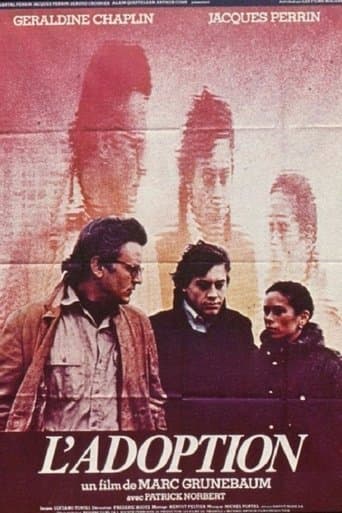
A couple takes on a homeless teenager. The trio forms a family-like community that seems to work extremely informally and without many regulations. But then the harmonic situation escalates as the boy falls in love with his "adoptive mother".
"Adoption," directed by the acclaimed Hungarian filmmaker Márta Mészáros, delves into the complex themes of familial bonds and the search for love and belonging. At the heart of the narrative is the unconventional relationship between a couple and a homeless teenager they take in, which serves as a poignant exploration of what constitutes a family. The film challenges traditional notions of parenthood and love, particularly as the emotional dynamics shift when the teenager develops romantic feelings for his adoptive mother. This tension not only highlights the fragility of human relationships but also raises questions about the boundaries of affection and the societal norms surrounding them.
The cultural impact of "Adoption" is significant, especially within the context of Hungarian cinema in the late 1970s. At a time when the country was under strict political control, Mészáros’s film emerged as a bold statement about personal freedom and emotional authenticity. By addressing taboo subjects like orphanhood, abandonment, and unconventional love, the film resonated with audiences who were grappling with their own societal constraints. It became a touchstone for discussions about family structures and the complexities of love, making it a progressive work that still feels relevant in contemporary discourse about relationships.
Visually, "Adoption" is marked by Mészáros's distinctive cinematographic style, which employs a naturalistic approach to storytelling. The film's use of subdued color palettes and intimate framing draws viewers into the emotional landscape of its characters, fostering a sense of closeness and immediacy. This technique allows the audience to feel the characters' internal struggles and the warmth of their connections, all while maintaining an understated realism. The cinematography works hand-in-hand with the narrative, capturing the raw emotions and the subtleties of the evolving relationships within this makeshift family.
The production history of "Adoption" is also noteworthy, as it was one of the first films directed by a woman to gain international acclaim in a predominantly male-dominated industry. Mészáros's personal experiences as a woman navigating the complexities of love, motherhood, and societal expectations significantly influenced the film's narrative. The film’s success not only catapulted Mészáros into the spotlight but also opened doors for other female filmmakers in Hungary and beyond. By centering a female perspective in a story about unconventional family dynamics, "Adoption" stands as a landmark work that continues to inspire discussions about gender representation in cinema.
FREQUENTLY ASKED QUESTIONS
REVIEWS
You need to be signed in to write a review.
No reviews yet. Be the first to review this movie!
DISCUSSION
Sign in to join the discussion.
No comments yet. Be the first to share your thoughts!