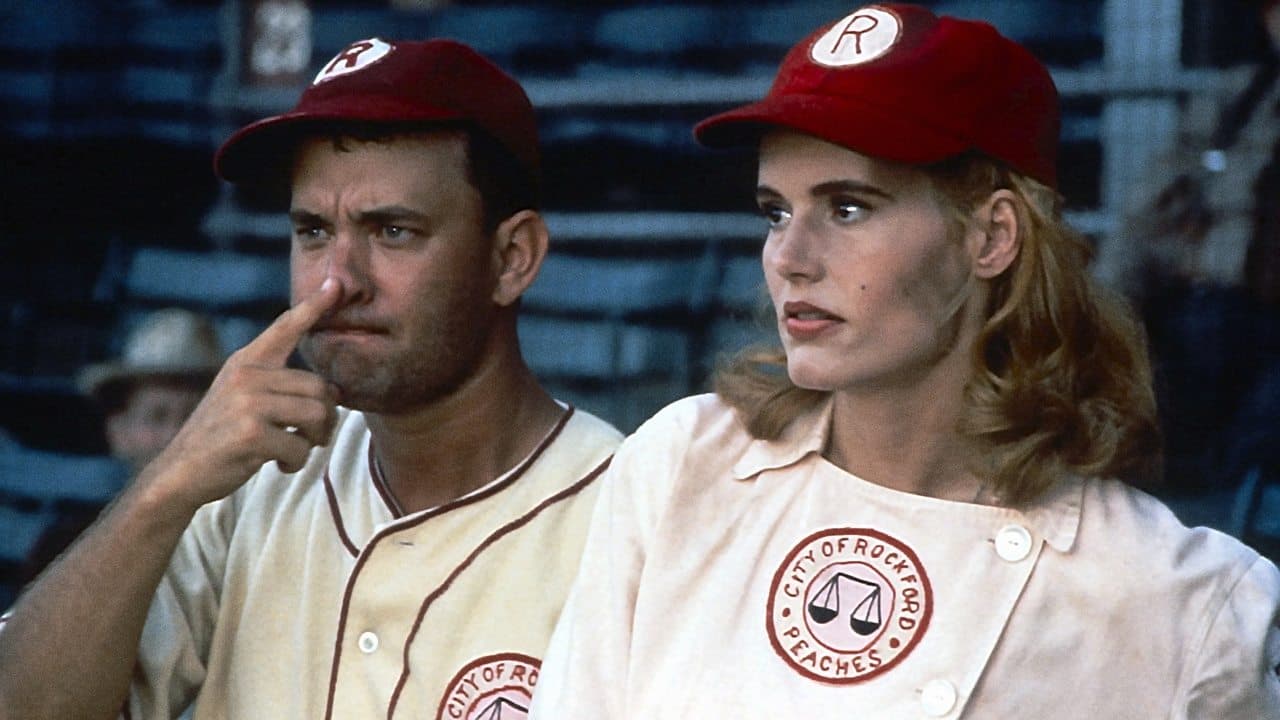
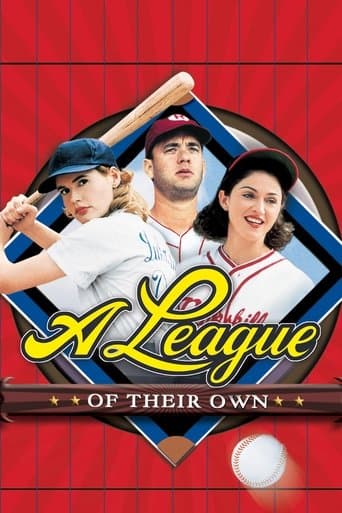
As America's stock of athletic young men is depleted during World War II, a professional all-female baseball league springs up in the Midwest, funded by publicity-hungry candy maker Walter Harvey. Competitive sisters Dottie Hinson and Kit Keller spar with each other, scout Ernie Capadino and grumpy has-been coach Jimmy Dugan on their way to fame.
"A League of Their Own" is not just a nostalgic sports film; it deftly explores themes of gender equality and the complexities of sisterhood. Set against the backdrop of World War II, the film highlights the societal shifts that allowed women to step into roles traditionally dominated by men. Through the rivalry and bond between sisters Dottie and Kit, the narrative examines how ambition can both unite and divide, encapsulating the struggle of women seeking recognition in a male-centric world. The film's famous line, "There's no crying in baseball," humorously underscores the pressure women faced to conform to rigid standards of toughness, while simultaneously challenging those very notions by showcasing the emotional depth of the characters.
The cultural impact of "A League of Their Own" extends far beyond its box office success; it has become a touchstone in discussions about women's sports and representation in media. Upon its release, the film brought attention to the All-American Girls Professional Baseball League (AAGPBL), a real-life organization that provided opportunities for women at a time when their roles were largely limited. The film revitalized interest in the league's history, inspiring new generations of female athletes and encouraging conversations about the importance of women's sports. It remains a beloved classic, often cited in discussions about the evolution of women's roles in both sports and film, paving the way for future narratives focused on strong female leads.
Visually, the cinematography of "A League of Their Own" beautifully captures the charm of the 1940s, blending vibrant colors with a nostalgic aesthetic that transports viewers to a different era. The film's director, Penny Marshall, and cinematographer, Miroslav Ondricek, employed a warm, inviting palette that reflects both the joy of the game and the camaraderie among the players. The on-field action sequences are expertly choreographed, lending an authentic feel to the baseball games, while intimate moments between characters are framed in a way that emphasizes their emotional journeys. The cinematography not only enhances the story but also serves to highlight the athleticism of the women, showcasing their skills and determination in a sport that was, at the time, heavily male-dominated.
The production history of "A League of Their Own" is as compelling as the story itself, marked by challenges and triumphs. The film was a significant departure for director Penny Marshall, who was known for her work on television and was relatively new to feature films. Despite initial hesitations from studios regarding the film's potential, Marshall's vision and determination led to a successful collaboration with a talented cast, including Geena Davis, Lori Petty, and Tom Hanks. The film's screenplay, which was inspired by a combination of real stories and fictional elements, underwent several revisions to balance humor with heartfelt moments. Ultimately, the film became a critical and commercial success, earning accolades and solidifying its place as a cultural landmark that celebrates the spirit of women breaking barriers in sports and beyond.