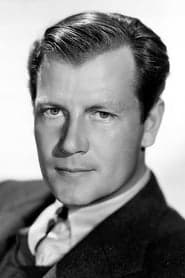
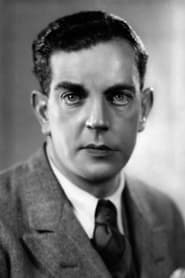
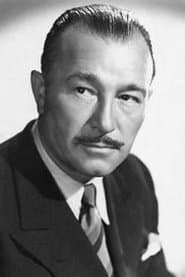
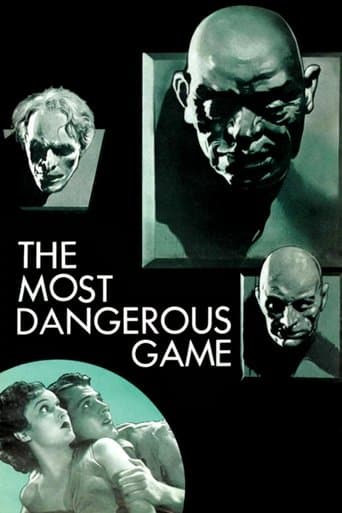
When legendary hunter Bob Rainsford is shipwrecked on the perilous reefs surrounding a mysterious island, he finds himself the guest of the reclusive and eccentric Count Zaroff. While he is very gracious at first, Zaroff eventually forces Rainsford and two other shipwreck survivors, brother and sister Eve and Martin Towbridge, to participate in a sadistic game of cat and mouse in which they are the prey and he is the hunter.
"The Most Dangerous Game," directed by Irving Pichel and Ernest B. Schoedsack, is a film that deftly explores the themes of civilization versus savagery. Released during the early years of the Great Depression, the film echoes societal anxieties about the erosion of moral values and the primal instincts that lie beneath the surface of genteel society. Count Zaroff, with his chilling persona and aristocratic demeanor, embodies the unsettling notion that those who are perceived as cultured can also harbor the darkest impulses. The film challenges viewers to consider the fine line between hunter and hunted, prompting reflection on the nature of humanity and the instinct for survival when faced with dire circumstances.
The film's production history is equally fascinating, as it was born out of a unique collaboration between two prominent filmmakers, Pichel and Schoedsack, who were also known for their work on the groundbreaking "King Kong" (1933). The influence of their earlier project is palpable in "The Most Dangerous Game," particularly in its adventurous spirit and thrilling visual storytelling. The film's tight production timeline, created in just a few weeks, speaks to the innovative spirit of Hollywood during the early 1930s, where filmmakers often had to maximize limited resources. This urgency in production did not compromise the film's quality; instead, it contributed to its taut pacing and suspenseful atmosphere, making it a timeless classic.
Cinematographically, "The Most Dangerous Game" stands out for its use of striking shadow play and atmospheric set design, which were revolutionary for its time. The film employs chiaroscuro lighting to enhance the tension between light and dark, symbolizing the moral ambiguities faced by the characters. The island itself, with its dense jungles and foreboding landscapes, becomes a character in its own right, encapsulating the themes of entrapment and the untamed wilderness. These visual elements not only heighten the suspense but also create a hauntingly beautiful aesthetic that has influenced countless films in the horror and thriller genres, solidifying the film's legacy as a stylistic precursor to future works.
Culturally, "The Most Dangerous Game" has had a lasting impact, resonating with audiences and filmmakers alike for its exploration of the hunter-prey dynamic. Its premise has inspired numerous adaptations and homages across various media, from literature and television to video games. The idea of humans hunting humans taps into primal fears and ethical questions, making it a compelling narrative that remains relevant. The film's influence can be seen in later works like "The Hunger Games" and "The Purge," where societal commentary intertwines with survival themes, proving that the exploration of humanity's darker sides is a motif that continues to captivate and provoke thought in modern storytelling.