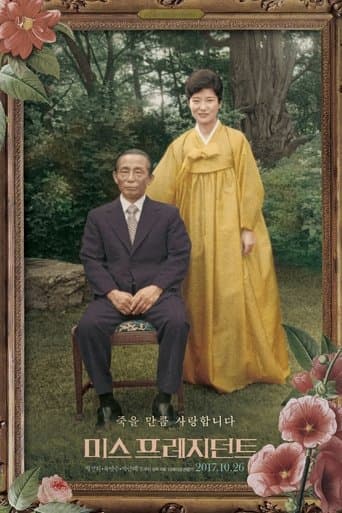
"Mis-President" is a unique exploration of identity and legacy, weaving together personal and political narratives that resonate deeply with contemporary audiences. The film centers on the protagonist, the daughter of a coup leader, who grapples with the weight of her father's actions and their implications on her own identity. This theme of inherited legacy is a poignant commentary on how the past shapes the present, prompting viewers to reflect on the complex relationship between familial history and individual agency. Through the lens of a personal story set against a backdrop of political upheaval, the film invites audiences to consider how personal choices can reverberate through generations.
Culturally, "Mis-President" speaks to the broader context of political instability and the role of women in leadership. By placing a female character at the center of a male-dominated political landscape, the film challenges traditional gender roles and highlights the often-overlooked narratives of women who navigate and resist the repercussions of political chaos. This focus on female empowerment is particularly relevant in today's sociopolitical climate, where discussions around women's rights and representation are more prominent than ever. The film thus serves as both a personal and political statement, advocating for a more nuanced understanding of leadership and resilience.
The cinematography of "Mis-President" plays a crucial role in enhancing its thematic depth. With its vibrant visuals and dynamic camera work, the film captures the contrasts between the opulence of power and the stark realities faced by the citizens. The use of color and light not only reflects the emotional states of the characters but also serves to underscore the tensions inherent in the political landscape. This stylistic choice creates a visually arresting experience that immerses the audience in the story, allowing them to feel the weight of the protagonist's internal and external struggles.
Production-wise, "Mis-President" is notable for its collaborative efforts across cultures, bringing together a diverse team of filmmakers. This international collaboration enriches the narrative, providing a multifaceted perspective on the political and social issues at hand. The film's production history highlights the importance of cross-cultural dialogue in storytelling, as it reflects the interconnectedness of global political narratives. By blending different cultural viewpoints, "Mis-President" not only aims to entertain but also to educate and provoke discussion on the implications of political power and its personal toll.